Barring unforeseen circumstances, exports are becoming a key driver of growth in China's auto sales.
On May 9th, Cui Dongshu, Secretary-General of the China Passenger Car Association, published an article stating that cumulative sales of passenger cars from January to April 2026 reached 3.28 million units, a year-on-year increase of 521 million units, setting a new record in recent years. Exports in April 2026 reached 939,000 units, a year-on-year increase of 511 million units and a month-on-month increase of 191 million units, continuing the strong performance since 2023.
Focusing on automakers, in April this year, the sales growth of domestic automakers such as BYD, Geely Automobile, and Chery Automobile was also driven by overseas sales. However, in an era where joint venture automakers with slogans like "In China, to the world" are all the rage, the focus of exporting is no longer solely on domestic automakers.
For joint venture automakers whose domestic market growth has stagnated or even faced a crisis, they are now clinging to exports, just like Yueda Kia did back then.
His gaze gradually hardened...
Just as Chinese automakers initially sought to acquire overseas production capacity, foreign brands like Volkswagen, Toyota, and Nissan also came to China to establish joint ventures and earn money from foreigners. However, in recent years, the situation has become increasingly distorted. Affected by factors such as the shift to new energy vehicles, joint venture automakers are finding it increasingly difficult to regain their former glory in the Chinese market.
For example, in April this year, SAIC Volkswagen sold 40,000 vehicles, a year-on-year decrease of 51.53%, marking the largest monthly decline in recent years; its neighbor GAC Honda sold only 5,100 vehicles in April, immediately becoming a trending topic. Even more extreme cases, such as Skoda, have openly stated that they cannot keep up with the pace of the Chinese market and have chosen to leave.
This lack of growth is not an isolated incident for joint venture automakers. With domestic brands projected to reach a market share of nearly 701 million T/3 million T in 2025, the decline of joint venture automakers is clearly evident. Then, an interesting phenomenon occurred: joint venture automakers have become increasingly focused on exports.
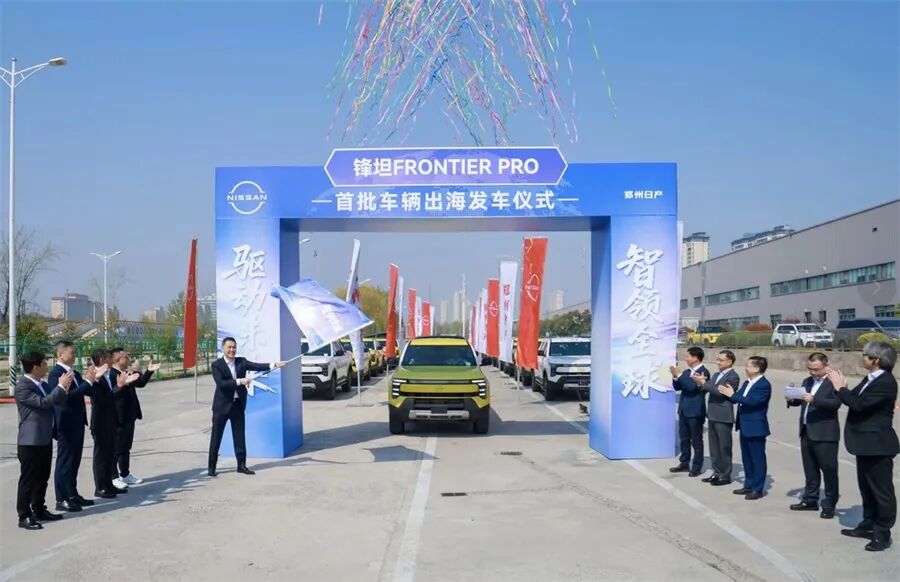
At the recent Beijing Auto Show, Nissan CEO Ivan Espinosa mentioned the brand's export plans in an interview. The N7 will be exported to Latin America and Southeast Asia first, and the Frontier Pro will soon be exported to Latin America, Southeast Asia, and the Middle East. Even the Dongfeng Nissan NX8 is in the works.
Volkswagen is even considering China as an export base. Previously, Volkswagen Passenger Cars CEO, Sven-Göran Schaffner, stated that they were "very seriously evaluating the possibility of China as an export base," planning to launch models developed and produced in China to markets in Southeast Asia, Mexico, North Africa, and South America.
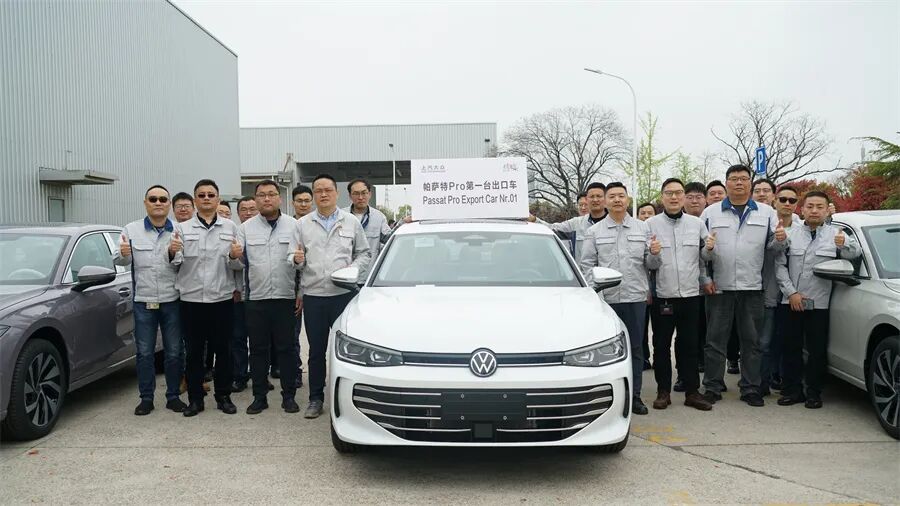
A more honest approach is that in April of this year, a batch of new Volkswagen models, including the Tiguan L Pro, Passat Pro, and Teramont Pro, were shipped to Uzbekistan via the China-Europe Railway Express. The new ID.ERA 9X also has clear export plans. Currently, few joint venture automakers believe that selling cars in China will allow them to survive and thrive.
His gaze hardened once more...
Admittedly, besides "exporting," joint venture automakers are also striving to manufacture and purchase cars in China. Toyota's chief engineer system in China and Volkswagen's close partnerships with its domestic supply chain are solid evidence of this. But today, we won't discuss that; we'll focus on exports. There are reasons why joint venture automakers are becoming increasingly committed to exports.
Since launching its export business in 2018, Yueda Kia has been thriving. To date, it has exported over 582,000 vehicles, with export sales exceeding US$6.34 billion. This has not only allowed it to thrive but also created opportunities for a comeback. Sales in April reached 20,000 units, a month-on-month increase of 11.51%.
It's important to understand that these days, joint venture automakers that can achieve growth are truly hard to find. Beijing Hyundai also benefited from increased exports, exporting 82,000 vehicles in 2025, a year-on-year increase of 48.671% (TP3T), while its total sales in 2025 were only 210,000 vehicles. Following a proven path naturally carries lower risk.
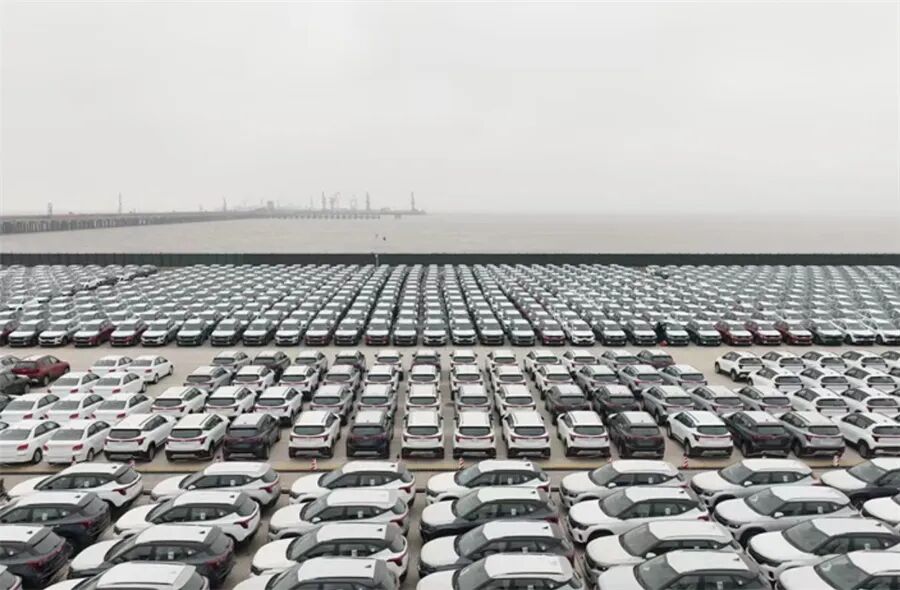
On the other hand, we need to start by explaining why China's car exports have surged. Simply put, Chinese cars are now more competitive, both in terms of cost and product quality. The term "gym for the automotive industry" has become a common impression of the Chinese car market among many multinational automakers in recent years. Under localization strategies, products like the N7 and ID.ERA 9X mentioned earlier have undergone significant upgrades, and exporting them overseas represents the export of more advanced electrification and intelligent standards.
Furthermore, joint venture brands are indeed well-suited for the export market. Ivan Espinosa mentioned that for global users, in addition to Chinese technology, attractive product design, and high-quality production standards, daily production capacity provides attentive service and ensures they can obtain the necessary after-sales parts. In other words, the vehicles produced by joint venture automakers bring product advantages, while their years of global expansion provide service advantages.
Of course, this job may not be very easy, after all, domestic car companies are also seeking profits and sales overseas.
 简体中文 简体中文
  English
 Русский
